

on cooking with what the season gives you and why it changes everything
there is a particular kind of patience that summer demands before it arrives.
you feel it in the air first; the shift, the loosening. the way the light starts staying longer than it has any right to. and then, slowly, the markets begin to change. the root vegetables that carried you through winter make way for something softer, more urgent. strawberries. peas still in the pod. herbs that bruise at a touch and smell like the inside of something alive.
if you are paying attention, summer tells you exactly what to cook.
this is not a new idea. long before farm-to-table became a phrase on menus and a movement with a manifesto, it was simply the way people ate. not as philosophy; as necessity. my ancestors didn't choose seasonal cooking because a book told them to. they cooked with what the land offered because that was the offering. what grew, you used. what didn't, you waited for. the discipline was built into the calendar, into the body, into the practiced hands that knew, without consulting anything, when something was ready.
there is something quietly radical about returning to that. about choosing the constraint that was once not a choice at all.
seasonal cooking asks something of you that most modern cooking doesn't: it asks you to follow, not lead.
the season is the chef. you are the translator.
this is a harder posture than it sounds. we are trained, by abundance, by convenience, by grocery stores that flatten time into a single perpetual season, to believe we are always in control of what we make. that creativity means selecting from infinite options. but real creativity, the kind that produces something true, almost always operates within limits. the sonnet has fourteen lines. the rondeau repeats. the cook in winter has parsnips and dried things and preserved goods and must make something beautiful from that specific, finite reality.
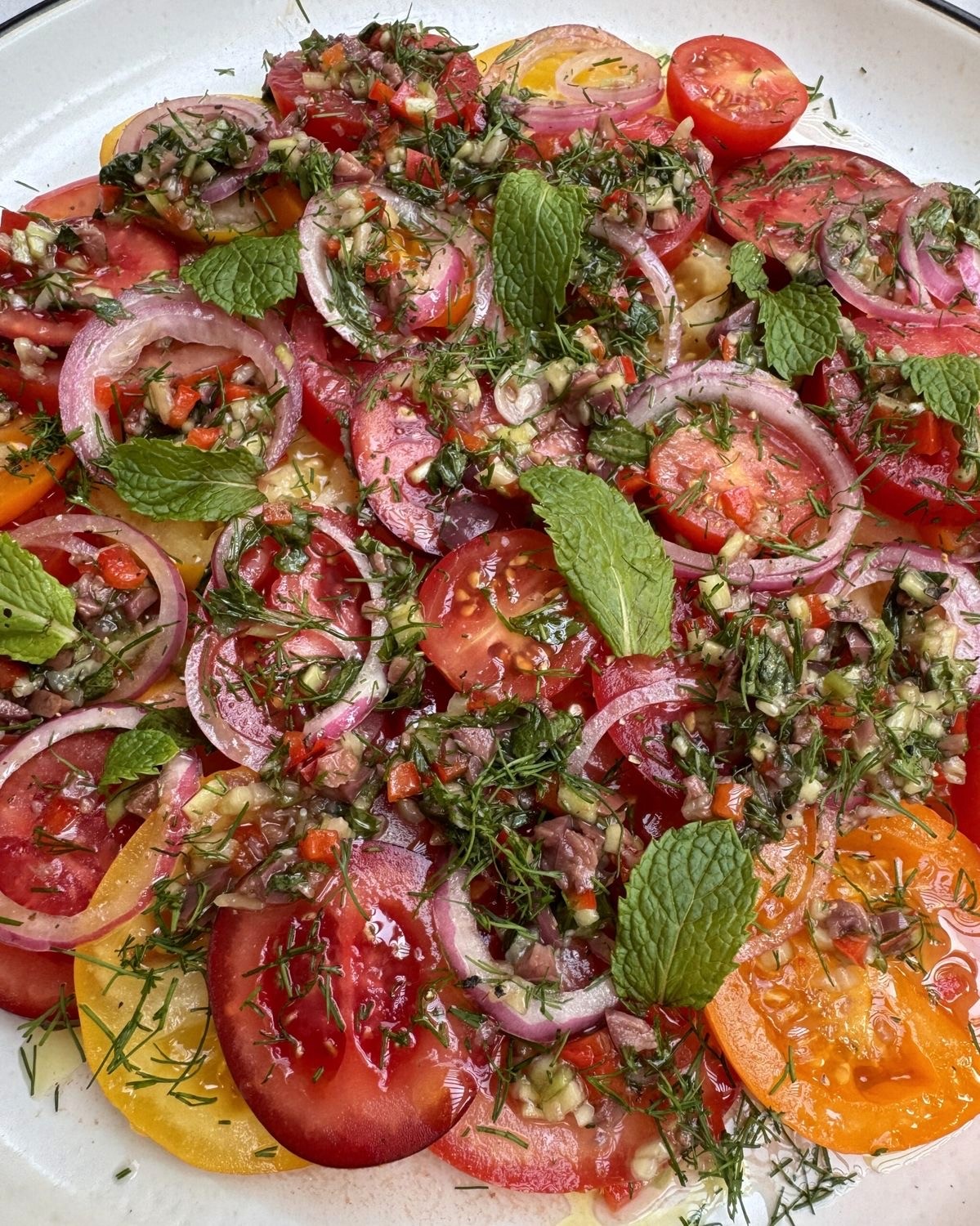
when summer comes, you have something different; lush and fleeting and requiring almost nothing from you except your presence and your restraint. a tomato at peak season barely needs salt. a peach does not need embellishing. your job is to not get in the way.
this is also where ancestry and practice meet.
when I think about the way food moved through the households of the women who raised me, or raised the women who raised me, I think about this particular skill: the ability to read what was in front of them and feed people from it. no recipe. no plan. a kind of deep fluency with ingredient and season and hunger that was learned not from instruction but from years of attentiveness. from standing beside someone who knew, and watching.
farm-to-table, at its most honest, is just that fluency made legible again. it is the shortening of distance, between land and table, between season and plate, between what was grown and what is eaten, so that the chain of intention stays visible. so you know where the thing came from. so the flavour carries that information.
food that travels a shorter distance tastes differently. not just fresher; truer. as though the ingredient arrived whole, still carrying what it was before it became something in your kitchen.
here's what I've found it changes, practically, when you let the season lead:
it changes how you plan. you stop building menus around dishes and start building them around what's available. the dish becomes a response, not a predetermined destination.
it changes how you taste. when you cook strawberries in June because they are here, briefly and abundantly, you taste them differently than you would in January. anticipation sharpens everything.
it changes how you waste. when you understand that the window is short, that this specific thing will not be here in four weeks, you treat it accordingly. with attention. with economy. with respect.
it changes your relationship to the pantry. what you preserve, pickle, ferment, or put up in summer becomes your winter vocabulary. the jar of tomatoes on the shelf is not just convenience. it is memory. it is a record of a specific August.