

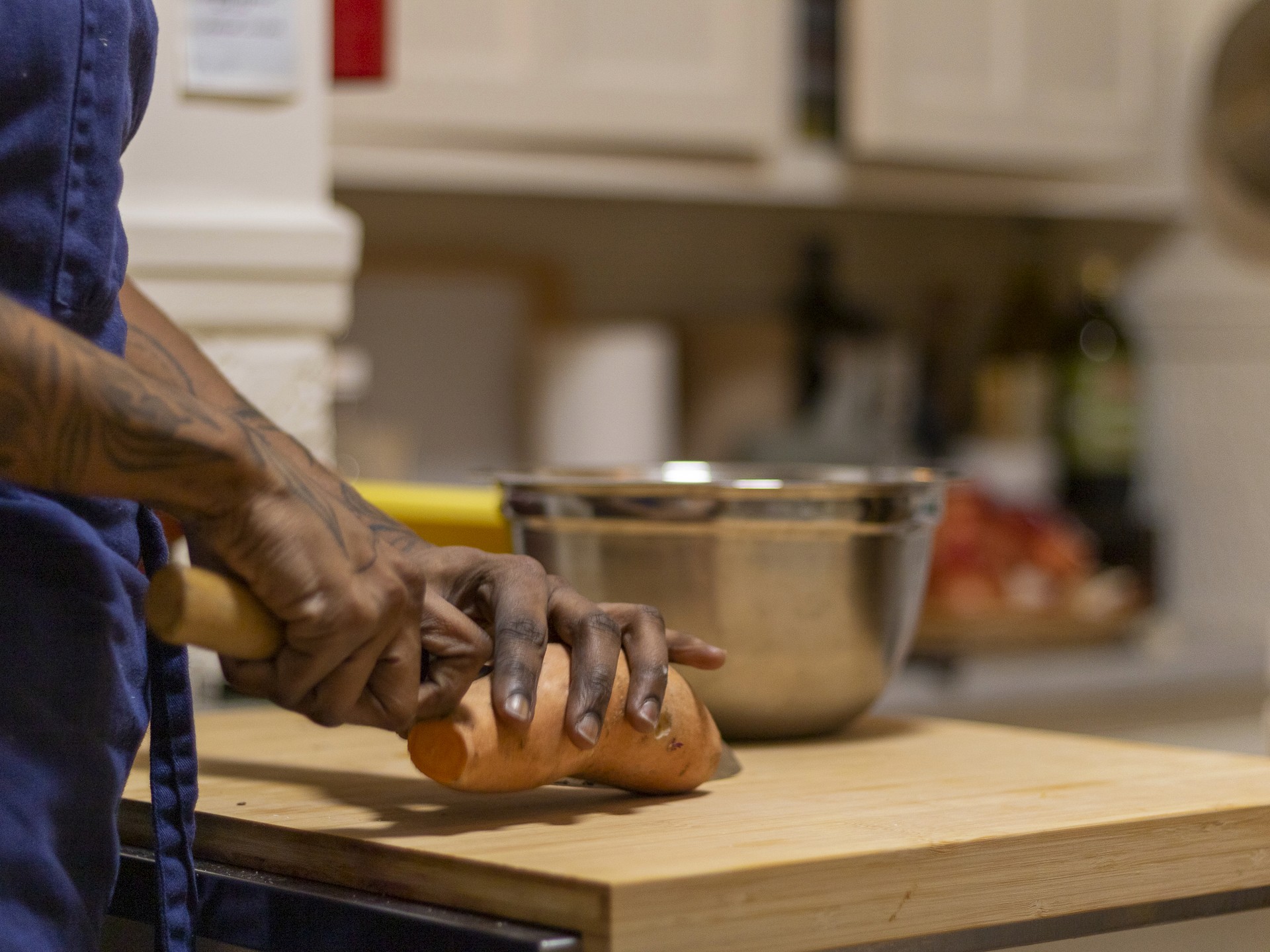
what it means to cook for someone and why I have never taken it lightly
there is a moment, right before a guest takes their first bite, where everything stills.
I have felt it in cramped home kitchens and in borrowed dining rooms. I feel it at every supper club, at every private table, at every pantry jar I seal and hand off at the door. it's a pause so brief most people don't notice it. but I do. I've been noticing it my whole life.
it is the moment I am reminded: this person is about to put something I made inside their body. and they are trusting me.
that is not a small thing. I have never let myself believe that it is.
feeding someone is one of the oldest forms of care that exists. before language was written down, before borders were drawn, before any of the systems we use to organize the world had names, people fed each other. they showed up with food. they stayed to eat together. they remembered, through the act of sharing a meal, that they were not alone.
I think about this more than I probably should. I think about the women in my lineage who cooked, what they knew that no recipe book ever recorded, the intelligence that lived in their hands, the way they seasoned by feel and memory and love and something that doesn't have a word in English. I think about what it meant for them to feed people under circumstances that were not always kind. what care looked like when the world outside the kitchen was trying its best to undo you. how the table became a kind of defiance. a declaration. we are still here. we are still feeding each other. we are still whole.
that inheritance lands with me every time I cook for someone. not as pressure. as purpose.
I've heard cooking described as service. as craft. as art. as industry. and it is all of those things, on the right day, in the right context. but I keep coming back to something simpler and harder to name: cooking for someone is an act of translation.
you take what you know, your training, your memory, your instincts, your culture, your capacity to taste and adjust and imagine what someone needs, and you translate it into something edible. something that enters their body and either nourishes or doesn't. either lands or doesn't. either says I see you or it doesn't.
that translation can fail in ways that go beyond the technical. a dish can be executed perfectly and still feel cold. a plate can be flawed and still feel like the most honest thing someone ever put in front of you. what makes the difference is intention. attention. the decision to take seriously that you are cooking for someone, not merely cooking at them.
I am relentlessly committed to the former.
there are the obvious ways feeding people carries weight, allergies, intolerances, religious observance, medical need. these are non-negotiable, and I treat them as such. not because I am required to, but because ignoring them would mean ignoring the person. and I cannot cook well for someone I am not paying attention to.
but the responsibility goes further than safety protocols. it reaches into the emotional territory of a meal. what does it mean to sit down at someone's table and feel genuinely held? what does it mean to eat food that was made with your full comfort, your specific joy, your particular history in mind? what does it feel like when that doesn't happen; when you sense that the person who cooked was going through motions, chasing aesthetics, performing hospitality without actually practicing it?
I know the difference. I think most people do, even if they don't have the language for it. the body knows when it has been fed versus when it has simply been filled.
I want to feed people.
I say this, too, as someone who has not always been easy with food. who has known the table as a place of war as much as welcome. who has understood, from the inside, what it means when the thing that is supposed to nourish you becomes instead a site of grief, when the body and the plate are in conflict, when eating is not a kindness you extend to yourself but something far more complicated than that.
I don't speak about that lightly or at length. but I carry it into every kitchen I work in. that knowledge, the hard, particular knowledge of what it costs when nourishment is withheld, when the relationship between you and food fractures, is part of why I cannot be careless with a meal. why I cannot pretend that feeding someone is a neutral act. it has never been neutral to me. I know too well what it means to need a plate to hold you, and to find that it couldn't.
what I make now, I make from the other side of that. Not fixed, nothing is ever so simple, but from a place of hard-won understanding. that food can be medicine when it is made with attention. that the table can be a safe place when the person who set it chose, deliberately, to make it one.
I started Lelawatti's because I believe food is infrastructure. it holds things up. it holds people together. it carries culture across time in a way that almost nothing else can. a recipe passed down is a form of preservation. a shared meal is a form of community building. a table set with intention is a political act.
none of that happens when the cook is careless. none of that arrives in the room when the person making the food hasn't asked, seriously, honestly asked, what this plate is for and who it's for and why it matters.
every time I cook for someone, I ask those questions. even when the answer is quiet. even when the meal is simple. even when no one at the table knows I asked.
I ask them because I believe that cooking is a responsibility I chose. not reluctantly, with full awareness of its weight, and with gratitude for the chance to carry it.
that weight is not a burden. it is, in fact, the whole point.
it is why I do not take lightly the moment before the first bite. the still, unhurried second when I remember: someone is about to trust me. someone is about to be fed.
I want to be worthy of that.
every single time.
asé,
nai-lela